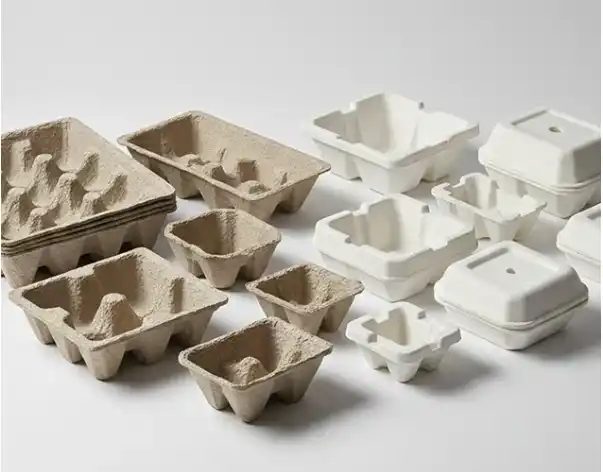
Choosing the right sustainable packaging can be tricky. If you are looking into molded pulp, you have likely heard of these processes. While both are eco-friendly, they look and feel very different. This guide will help you understand their differences so you can pick the best option for your brand.
1. How They Are Made: The Production Process
The main difference between these two methods is how the water is removed from the paper pulp.

Dry Press Process
- Pulping—— Recycled paper or cardboard is mixed with water to create a slurry.
- Forming—— A mold shapes the pulp into a "wet blank".
- Air Drying—— This step is unique to dry press. The wet blank is dried naturally or in a large oven to reduce moisture and allow structural integrity.
- Hot Pressing—— Once dry, the blank is heat-pressed in a mold to define its final shape and surface texture.
- Trimming—— The product edges are precisely cut to meet final specifications.
Wet Press Process
- Pulping—— This usually uses high-grade materials like sugarcane bagasse pulp.
- Forming—— Just like dry press, the pulp is shaped into a wet blank.
- Hot Pressing—— Wet press eliminates the separate air-drying step. The product is compressed under high temperature and pressure while it is still wet to form its final shape and surface.
- Trimming—— The final touch for clean product edges.
Key Difference: Dry press includes a separate drying phase between forming and hot pressing. Wet press skips drying and goes straight into heat pressing, which makes the entire cycle more compact, but requires much longer pressing times and higher mold precision.
2. Head-to-Head: Comparison of All Dimensions
To help you decide, we have combined all technical and commercial factors into one complete table.
| Factor | Dry Press | Semi-Wet Press | Wet Press |
|---|---|---|---|
| Surface Smoothness | Rough | Good | Excellent (Ceramic-like) |
| Thickness | 1.5mm - 3.0mm | Medium | 0.8mm - 1.0mm |
| Back Side Feature | Visible wrinkles | Slight texture | Clear mesh pattern |
| Density (Stiffness) | Low | Medium | High (30%+ higher) |
| Tooling Cost | Low | Medium | High |
| Unit Cost | Low | Medium | High |

Dry Press Surface

Dry Press Back Side
Identification Marks: You can easily spot wet press molded pulp by a distinct mesh pattern on the back. This is left by a stainless steel screen used to filter water during the pressing stage.

Wet Press Surface

Wet Press Back Side
3. Why is Wet Press More Expensive?
Many customers are surprised by the price of wet press. It is not just about the material; it is about the Time and Engineering required:
- Slow Production (The 3-Minute Cycle): In dry press, products are formed in seconds. In wet press, the product must stay inside the heated mold until it is completely dry. A typical machine might produce only 6 pieces every 3 minutes. This slow speed significantly increases labor and production costs.
- High Tooling Costs: Wet press molds are made of high-precision aluminum or stainless steel. They must withstand extreme heat and pressure for long periods, making them much more expensive to build than dry press molds.
- Energy Usage: Evaporating all the water directly within a hot metal mold uses a massive amount of energy compared to a simple drying tunnel.

4. Which One Should You Choose?
Choose Wet Press if:
- You want a premium, high-end brand image.
- Packaging small electronics or luxury goods.
- You need a very thin, space-saving design.
- Common uses: Phone trays, jewelry inserts.


Choose Dry Press if:
- You are on a tight budget.
- You need to ship large, heavy industrial items.
- Surface beauty is not your main goal.
- Common uses: Egg trays, industrial end-caps.
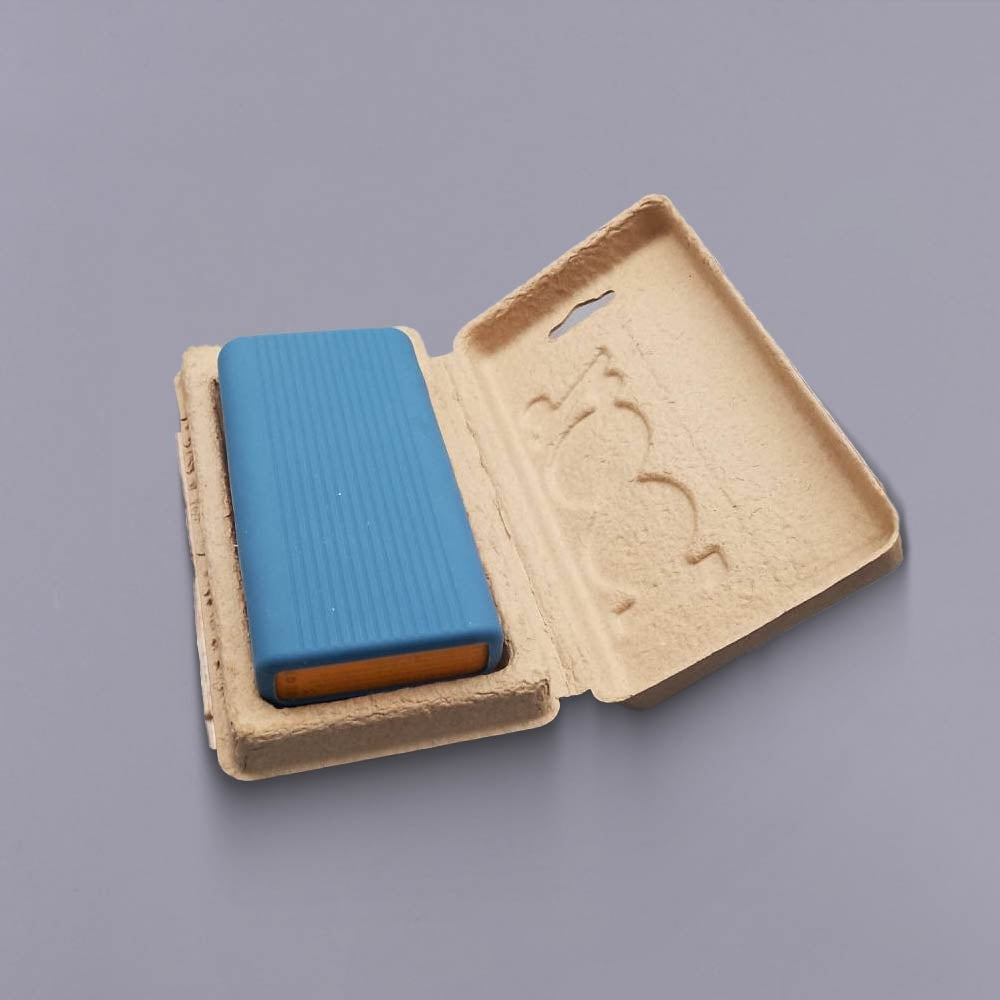

Still can't decide? You might consider Semi-Wet Press, which offers a balance of medium cost and good surface smoothness.
5. What is Semi-Wet Press? (The Middle Ground)
Semi-wet press is a hybrid process designed to balance quality and cost. This is the ideal choice for those looking for dry press molded pulp efficiency with a cleaner look.
The Process
Unlike wet press, which dries the product 100% inside the mold, the semi-wet process takes a "shortcut." The pulp is formed and then partially dried to remove a large portion of the moisture. Afterward, it is placed into a hot press for final shaping while it is still slightly damp.
Why it is "Medium" ?
- Cost: It is cheaper than wet press because the final pressing time is shorter, which increases production speed. However, it is more expensive than dry press because it still requires precision hot-pressing equipment.
- Quality: Because the product is still damp during the final press, the fibers bond better than in the dry press process. This creates a surface that is smoother than dry press but not as sleek as the ceramic-like finish of wet press.
- Performance: It provides better structural stiffness than dry press but offers more cushioning than the very dense wet press.

Semi-Wet Press Surface

Semi-Wet Press Back Side
Final Thoughts
In the world of sustainable packaging, there is no single "best" process—there is only the process that fits your specific needs. Understanding these technical differences helps you make a smarter investment for your brand.
Whether you are looking for the rugged, cost-effective protection of traditional solutions or the sleek, high-end elegance of wet press molded pulp, understanding these technical differences helps you make a smarter investment for your brand.
Ready to start your project? Whether you need a protective cushion for a heavy appliance or a polished tray for a luxury skincare kit, we can help you choose the right process to protect both your product and the planet. Contact us today for a consultation or a custom quote!